Corals are living beings, invertebrate animals that belong to the same family as jellyfish and sea anemones. At least a quarter of all marine sea creatures rely on corals for food and shelter. Coral reefs are found mostly along coastlines of warm oceans in the tropics. The most prominent coral reefs in India are in the Gulf of Mannar, the Andaman and Nicobar Islands, Lakshadweep, and the Gulf of Kutch.

Coral reefs are magical wonderlands of colours and shapes. The fish they host are equally vibrant and dramatic. Coral is made up of thousands of tiny pin-head sized polyps, which is what these red-tailed butterfly fish feed on.

Almost all corals, like this table coral, are found fairly close to the surface. Corals contain algae that live symbiotically with them; algae need sunlight for photosynthesis, and in turn feed the coral.
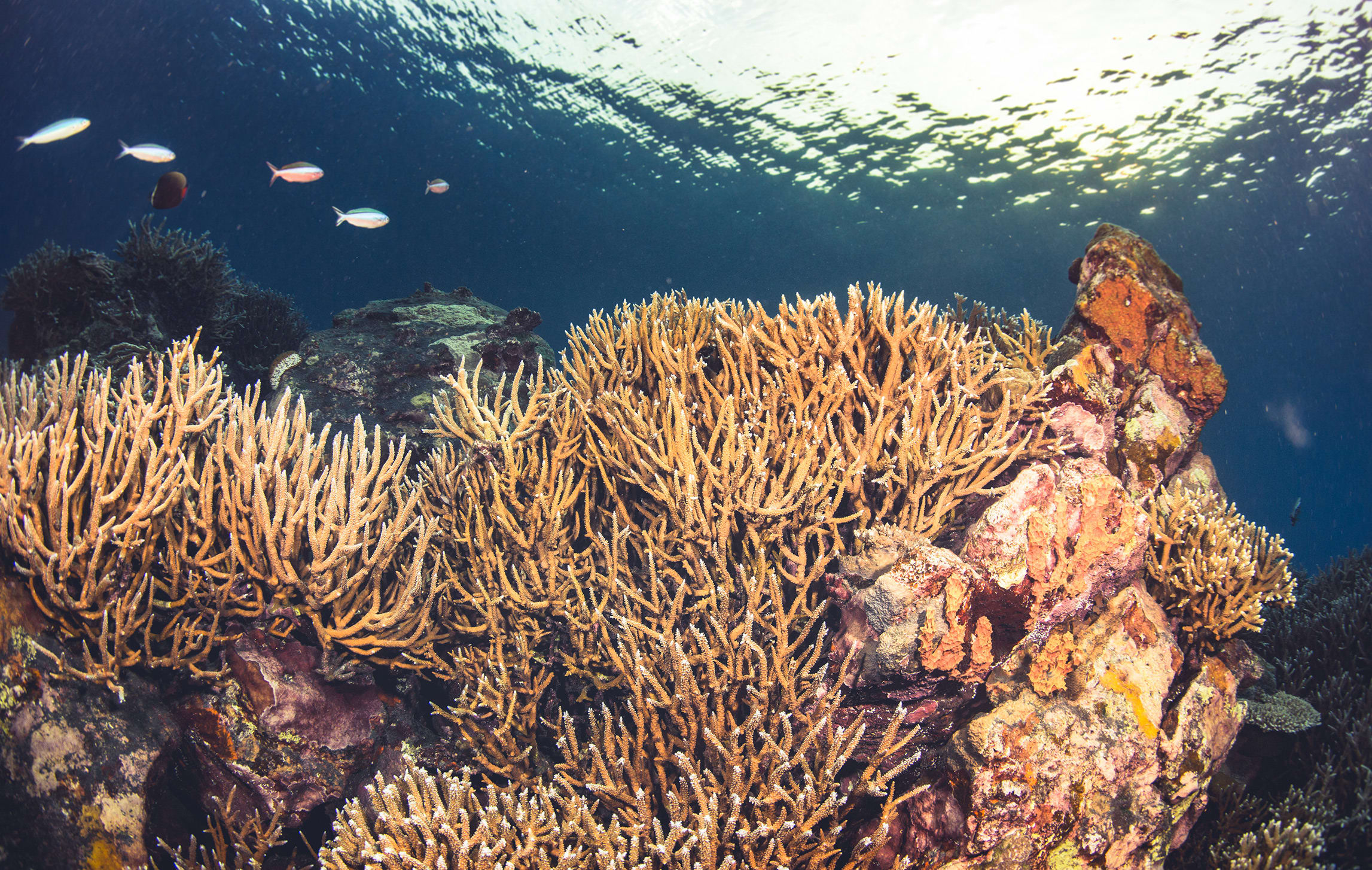
Corals need hard natural surfaces like rocks and shells to grow on, and they flourish in clear salty water with lots of sunlight. Pollution suffocates and kills them.

A range of different coral, like this green sea-fan coral and orange barrel sponge, live side by side on a reef. Barrel sponges, which come in a range of colours, tend to live for thousands of years. They are the reef’s primary recycling units and are also responsible for providing nutrition to many of the organisms that live there.

There are around 800 species of hard coral. When you see coral like the montipora, which itself has 85 different species, it’s hard to remember that corals are not plants. They often look like shrubs, bushes, or trees.
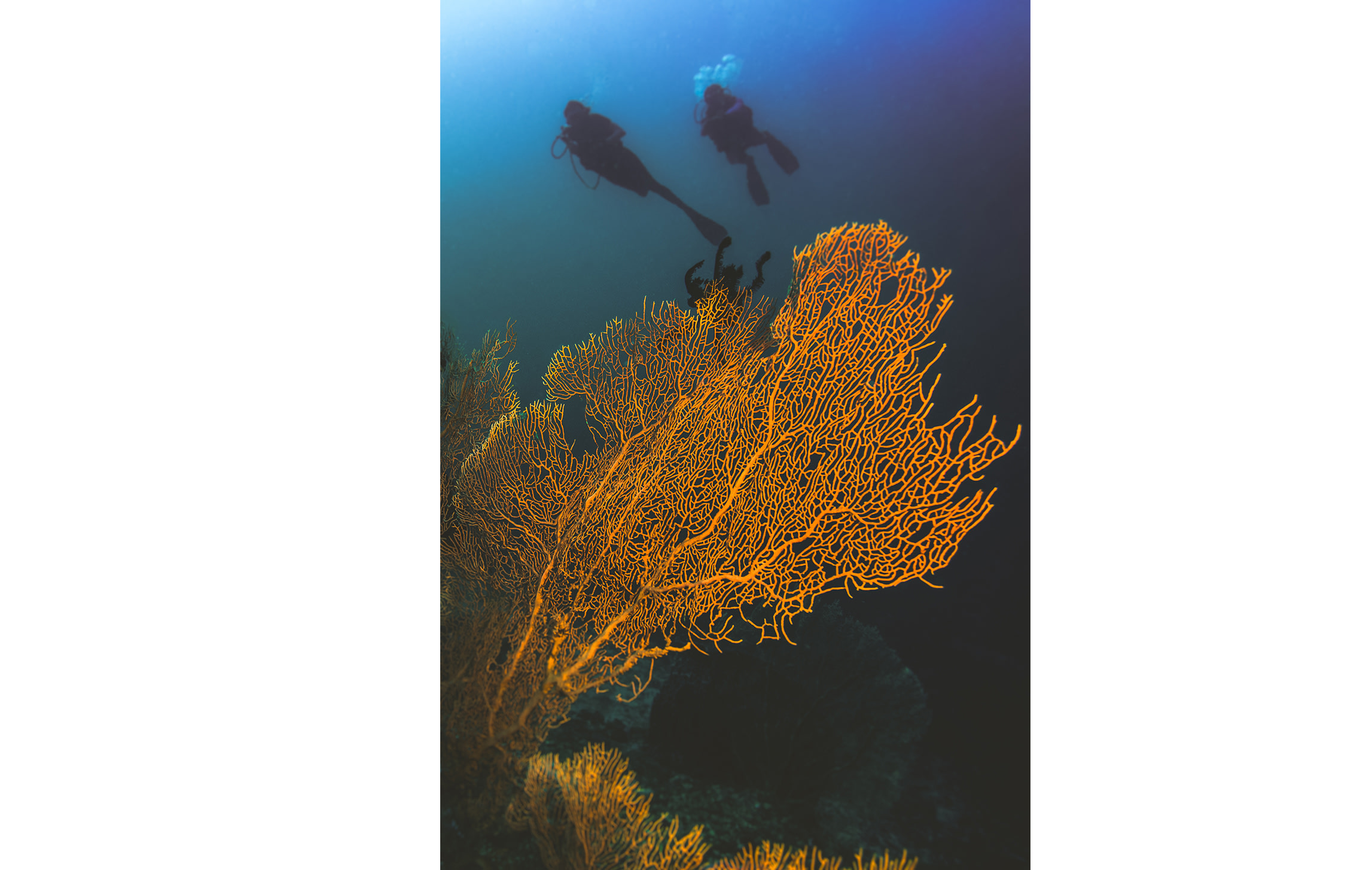
Coral reefs support enormous biodiversity. It is estimated that close to 4,000 different species can live together on a single reef, which represents a hundred times the diversity found in the open ocean.
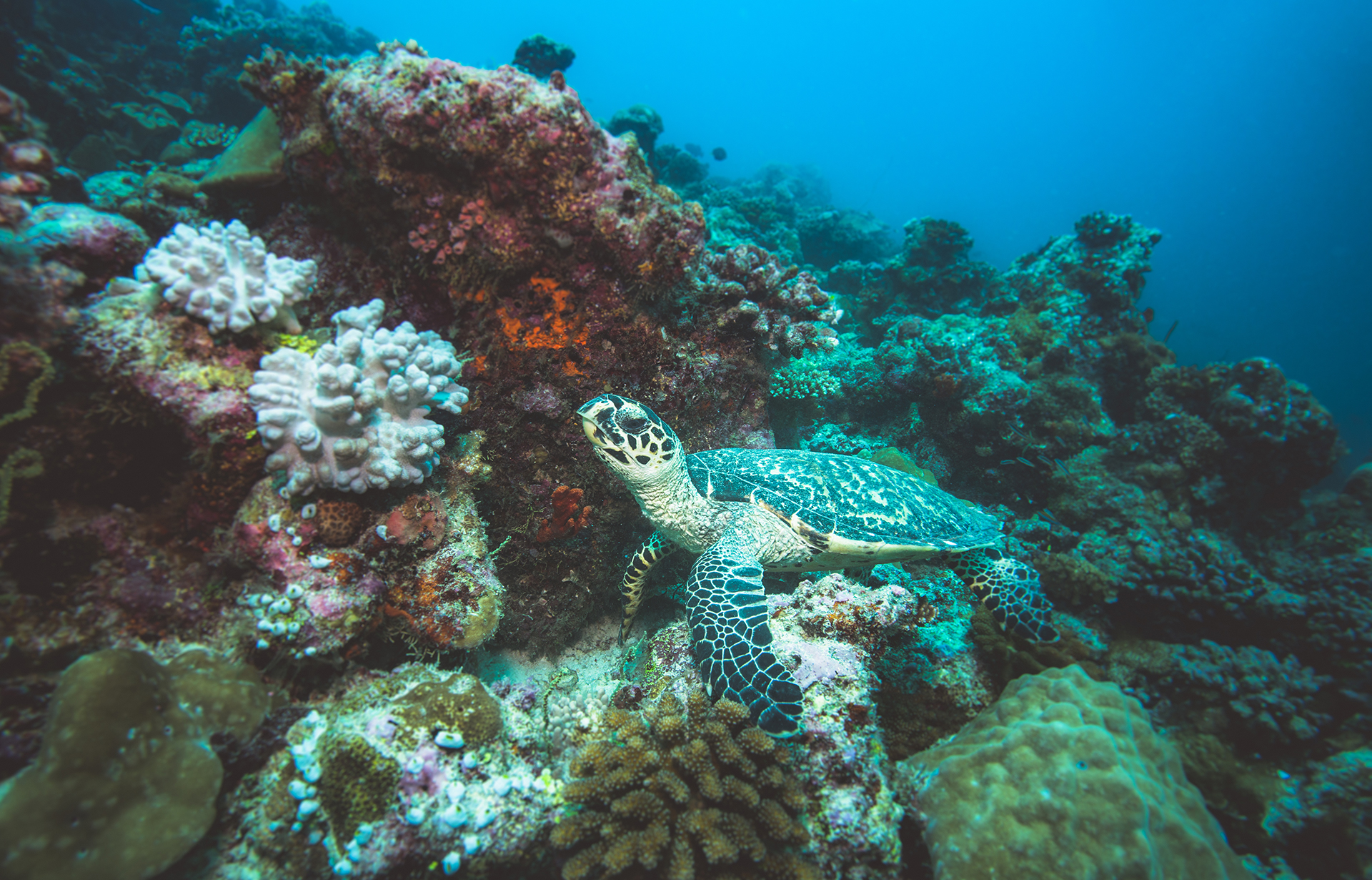
The hawksbill sea turtle has a gorgeous colourful and patterned shell, and unique narrow pointed beak. It mainly eats sponges, but will also consume sea anemones and jellyfish to support its 40-70 kilo body weight. Hawksbill sea turtles are critically endangered for a variety of reasons, from loss of nesting and feeding habitats, to accidental capture and wildlife trade.

Vibrant and attractive, crown-of-thorn starfish balance and control the coral ecosystem when they exist in single digit numbers. When they multiply in a sudden bloom, these venomous predators are capable of decimating an entire reef in a short time.

Numerous factors are threatening coral reefs around the world, from over-collection of sand and overfishing, to pollution and the exploitation of coral for wildlife trade. However, it is the effect of warming sea temperatures as a result of climate change that most threatens coral survival.

United States
+1 (425) 454-2113
1756 114th AVE SE
Bellevue, WA 98004
India
+91-11 39585644
IT C-7 KMG Tower
2nd Floor, Sector 67,
SAS Nagar
Mohali – 160062, Punjab