Gorillas are the largest of the great apes. They are intelligent animals that share 98.3% of their DNA with humans, have the ability to use tools, and communicate with each other in a variety of ways including using at least 25 different sounds. Add to that a stocky build, broad shoulders extending into long arms, and hands like humans. All of which makes them very intriguing.
There are two species of gorillas: eastern and western. I visited the Democratic Republic of Congo (DRC) to see eastern gorillas in their natural habitat, by trekking through the dense forests in which they live. Eastern gorillas are further divided into two subspecies: the eastern lowland and mountain gorillas. Of these, the most famous are the mountain gorillas, which I visited first. These endangered animals today number barely 800 in the wild. About half of them live in the Virunga Mountains, a range that cuts across the borders of the DRC, Rwanda, and Uganda.
Eastern lowland gorillas numbered over 17,000 less than three decades ago, but are now estimated to be under half that number. The largest population of protected eastern lowland gorillas live in the DRC’s Kahuzi-Biega National Park, my second stop.
Years of war and civil unrest in the region decimated the habitat and population of gorillas. Numbers are only now beginning to bounce back thanks to groundbreaking conservation efforts. Part of the way in which gorillas continue to be protected is through organized ecotourism efforts. This involves reputed, licensed operators taking a limited and regulated number of visitors trekking into the mountains to observe gorilla groups that have been habituated to humans.
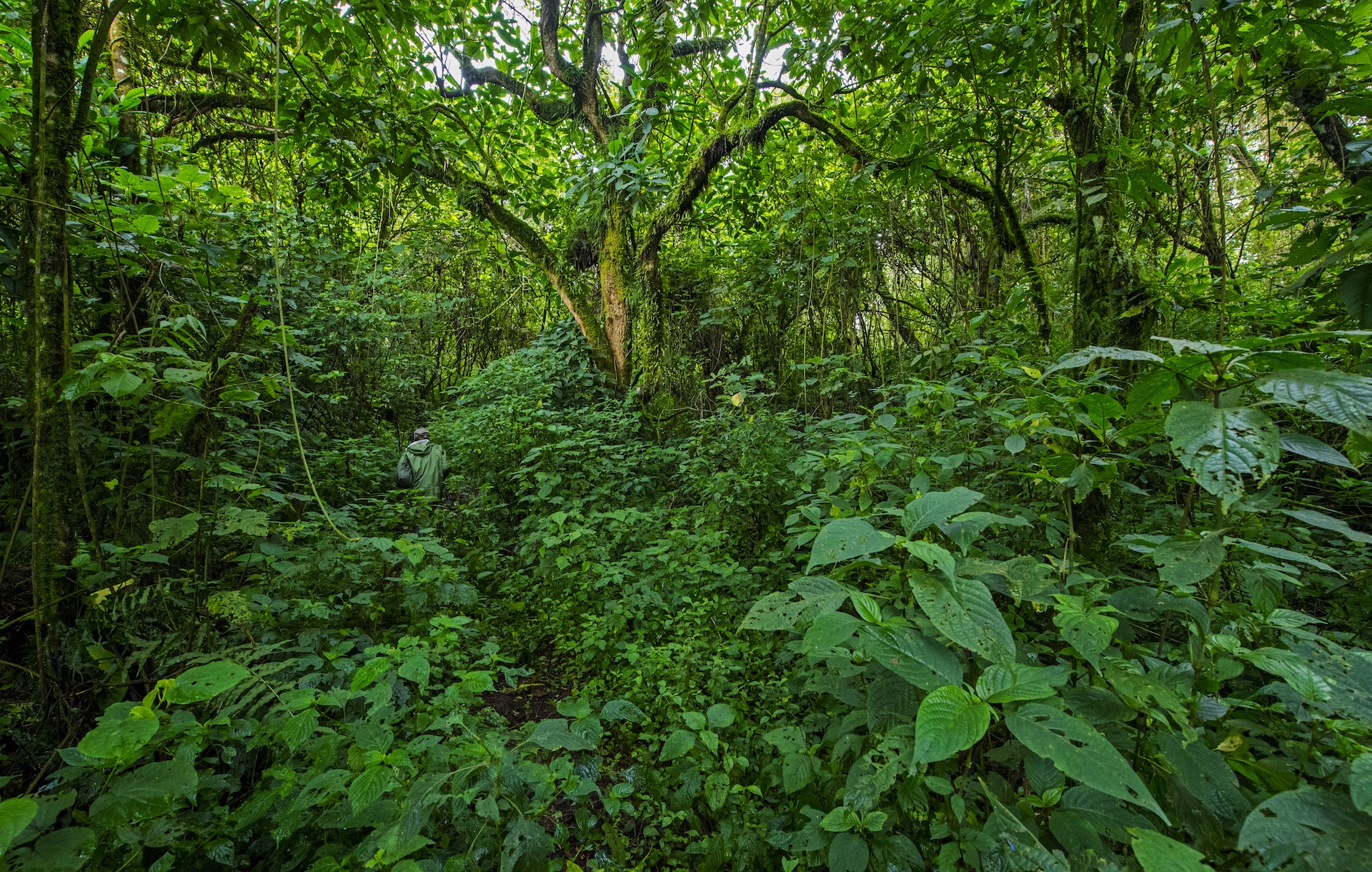
The misty cloud forests of Virunga National Park are the last remaining habitat of mountain gorillas. To see them we had to hike through dense tropical forests, with our guide hacking a path through the undergrowth.
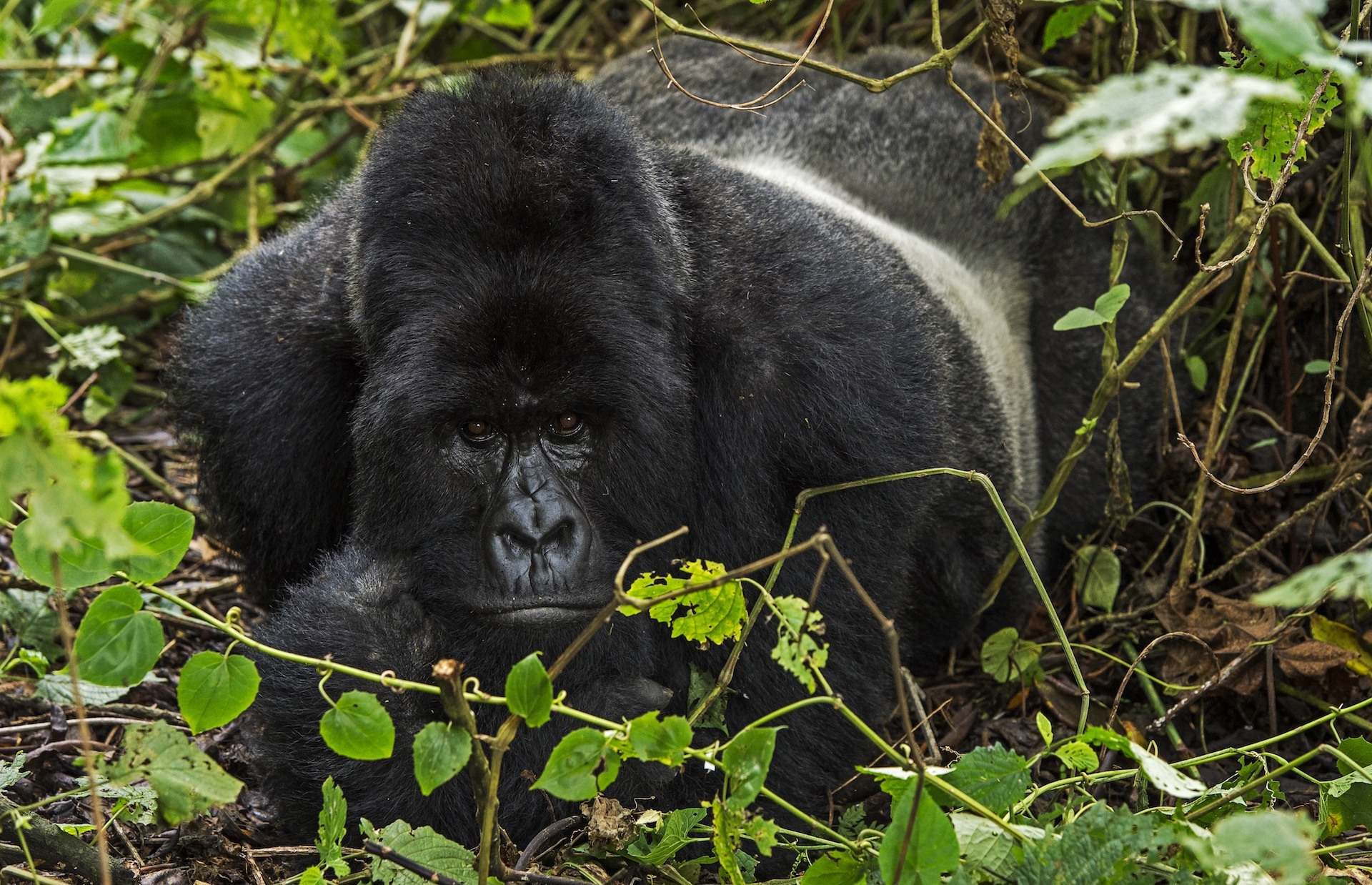
Silverbacks are adult male gorillas over the age of ten. They get the name from the distinctive silver-white patch that emerges on their backs at maturity. Though adult mountain gorillas, like this one we spotted resting, are roughly the same height as humans, they are more thickset and can weigh three times as much.

Most mountain gorillas live in bands or troops, with a silverback as their leader. Group size is usually about 20, although 40-member troops have also been recorded. The little ones spend their time playing, jumping, and tumbling around, always under the protection and watchful eye of the older individuals.
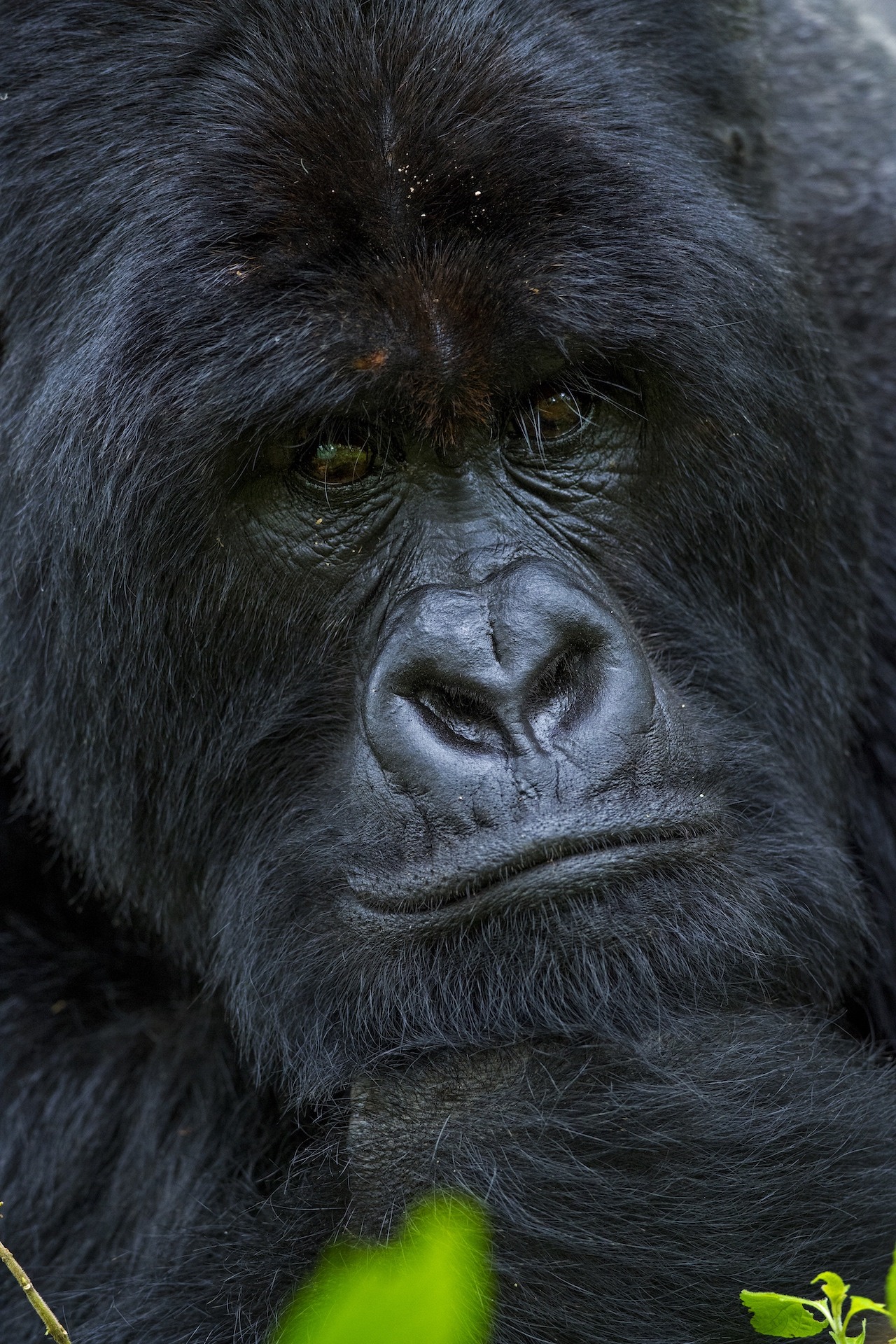
Individual gorillas can be identified by their features, build, manner, and interestingly, their nose print—a unique pattern of wrinkles on their nose. Of the various species of gorillas, mountain gorillas appear to have the most distinct nose prints.
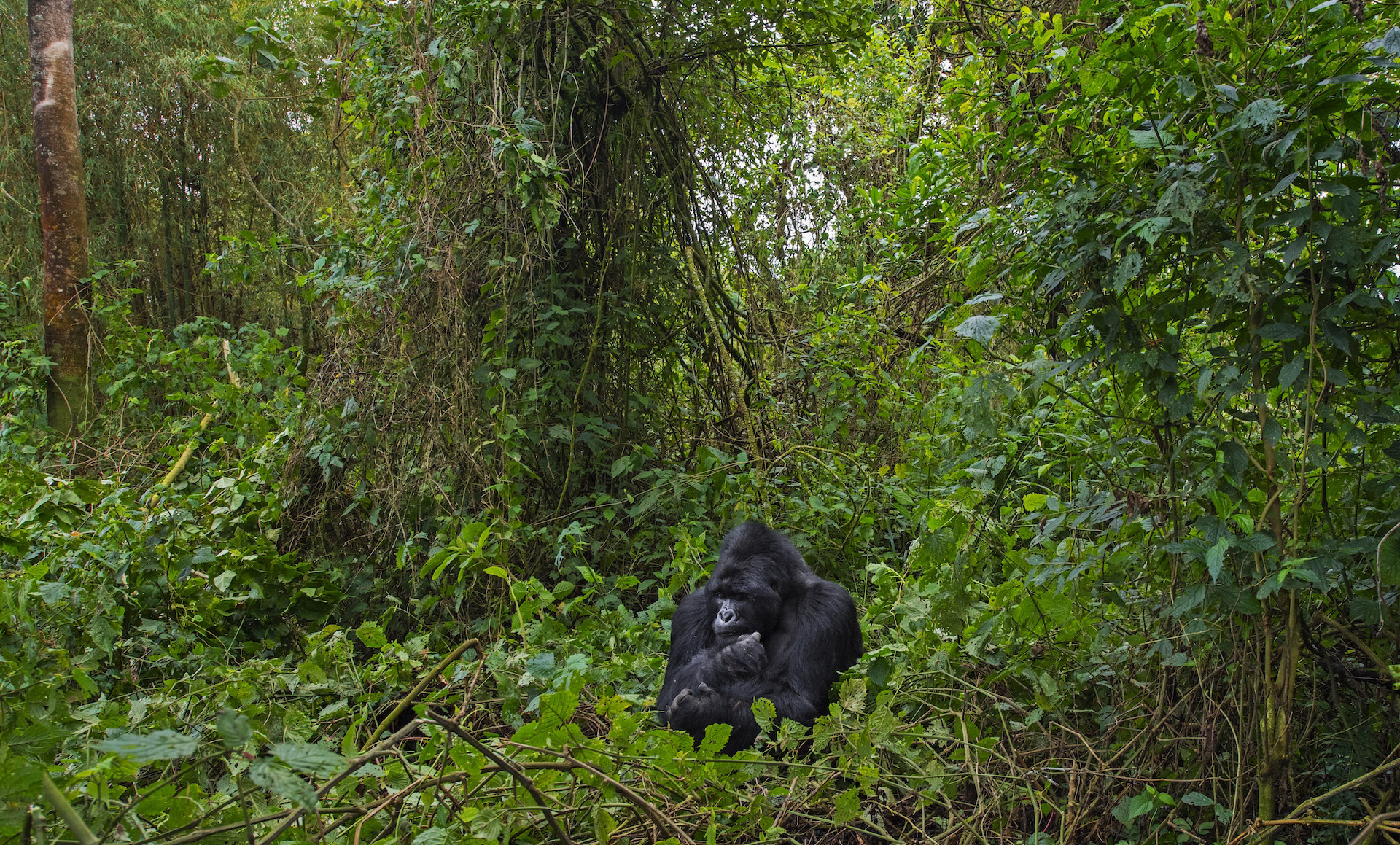

Mountain gorillas live in the Virungas at an altitude of between 7,000 – 10,000 feet, where temperatures can fall to below zero. They have evolved to have a thicker, denser fur coat than their lowland cousins. Gorillas build sleeping nests in different locations, a new one every day. They do not sleep in the same place two nights in a row since they are constantly moving while foraging. Leaves, shoots, roots, and fruits are the main items of a gorilla’s diet. They are primarily vegetarians, but some gorilla species also consume a small amount of forest termites, ants, snails, and grubs.
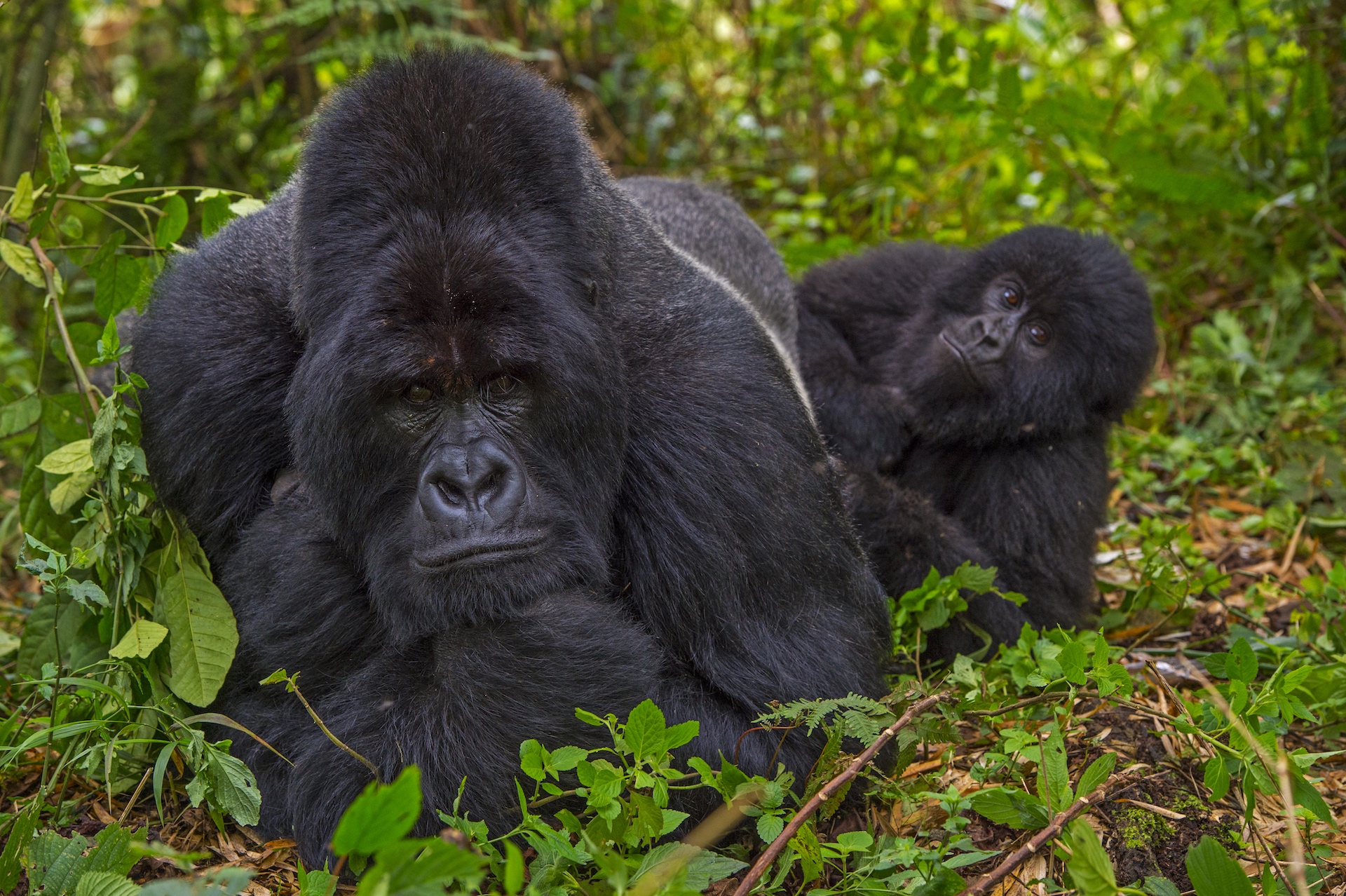
Although females are the main caregivers for gorilla babies, the lead male silverback also plays an important role in rearing. He protects the young ones from danger, plays with them, creates a bond and maintains a close physical relationship with them.
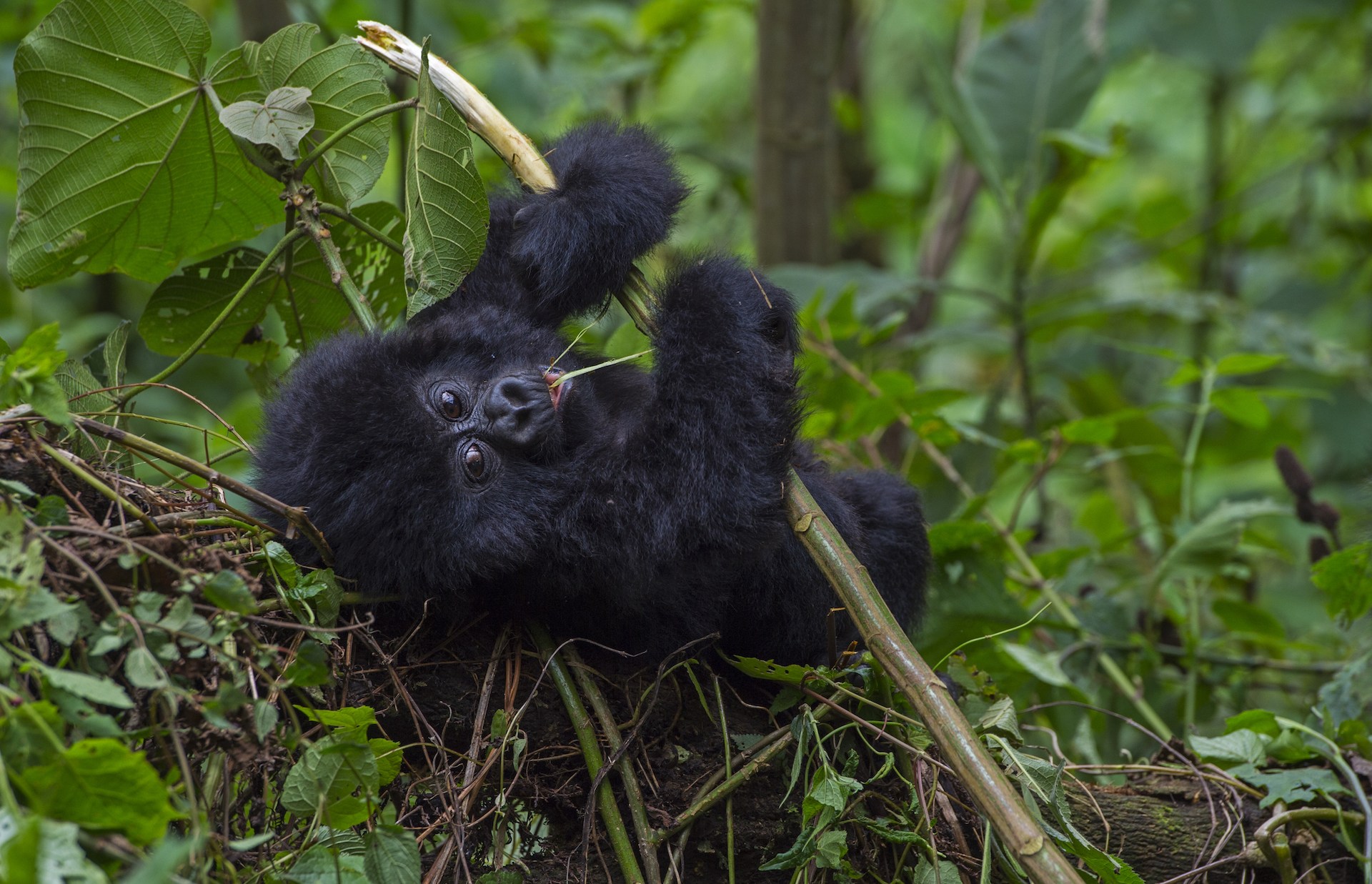
With three silverbacks and his mother around, this tot was enjoying himself playing and swinging in the vegetation, while still watching us visitors. Gorillas normally give birth to just one baby at a time, and only once in four to six years.
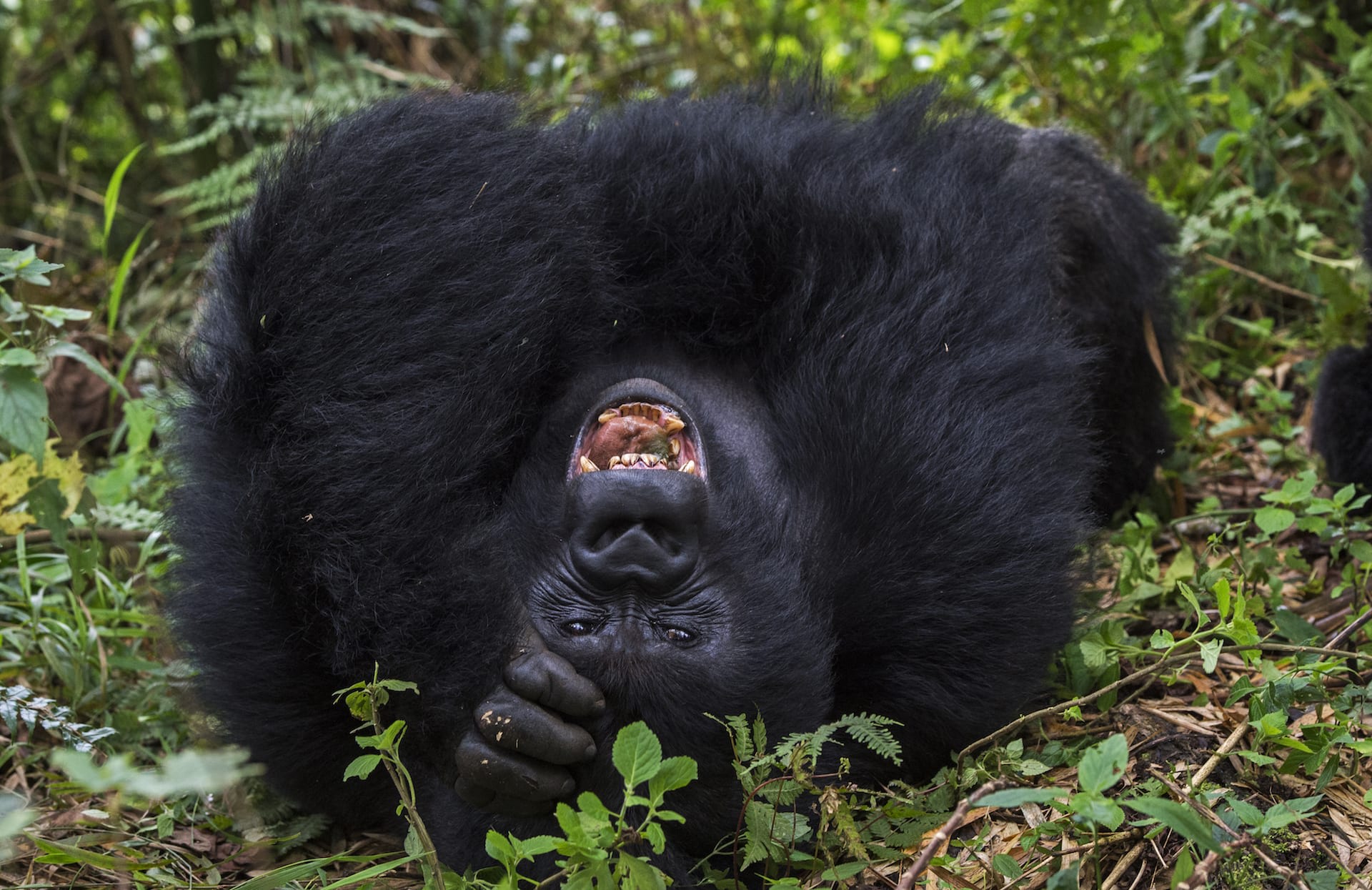
A female gorilla stretched out and yawned nearby, as our guide reassured us that this was not threatening behaviour. Instead, it showed that the gorilla was habituated to human observers and was comfortable enough to yawn in front of us. Contrary to popular belief, gorillas do not fight much. Their chest beating and hooting is a display of aggression to prevent or avoid a physical duel, rather than incite it.
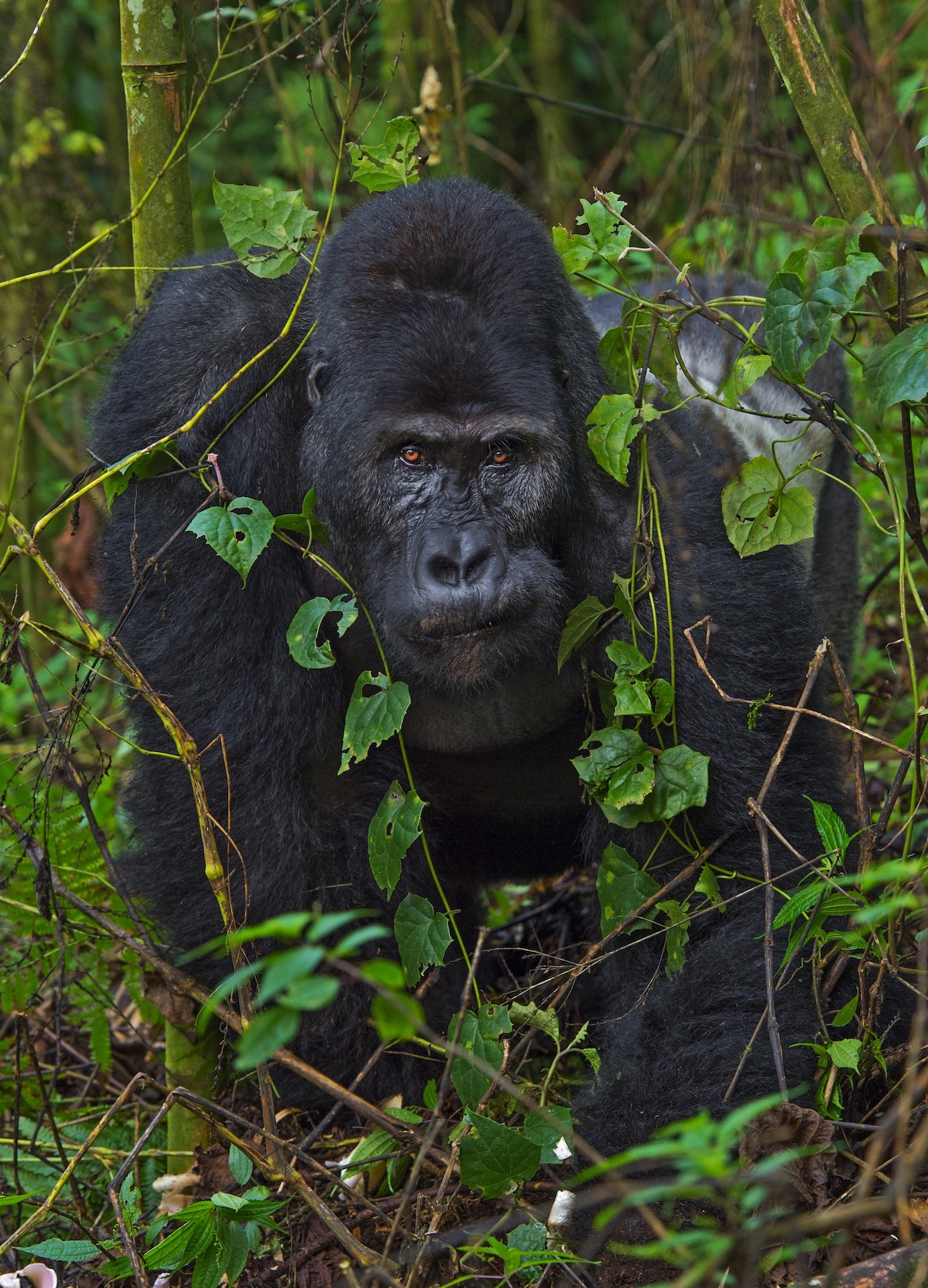
The arms of a gorilla are longer than its legs. It walks mostly on all fours, but can also stand and walk forward a few metres on two feet. This enormous silverback eastern lowland gorilla was moving around his range and feeding on the roots of a seasonal local plant.
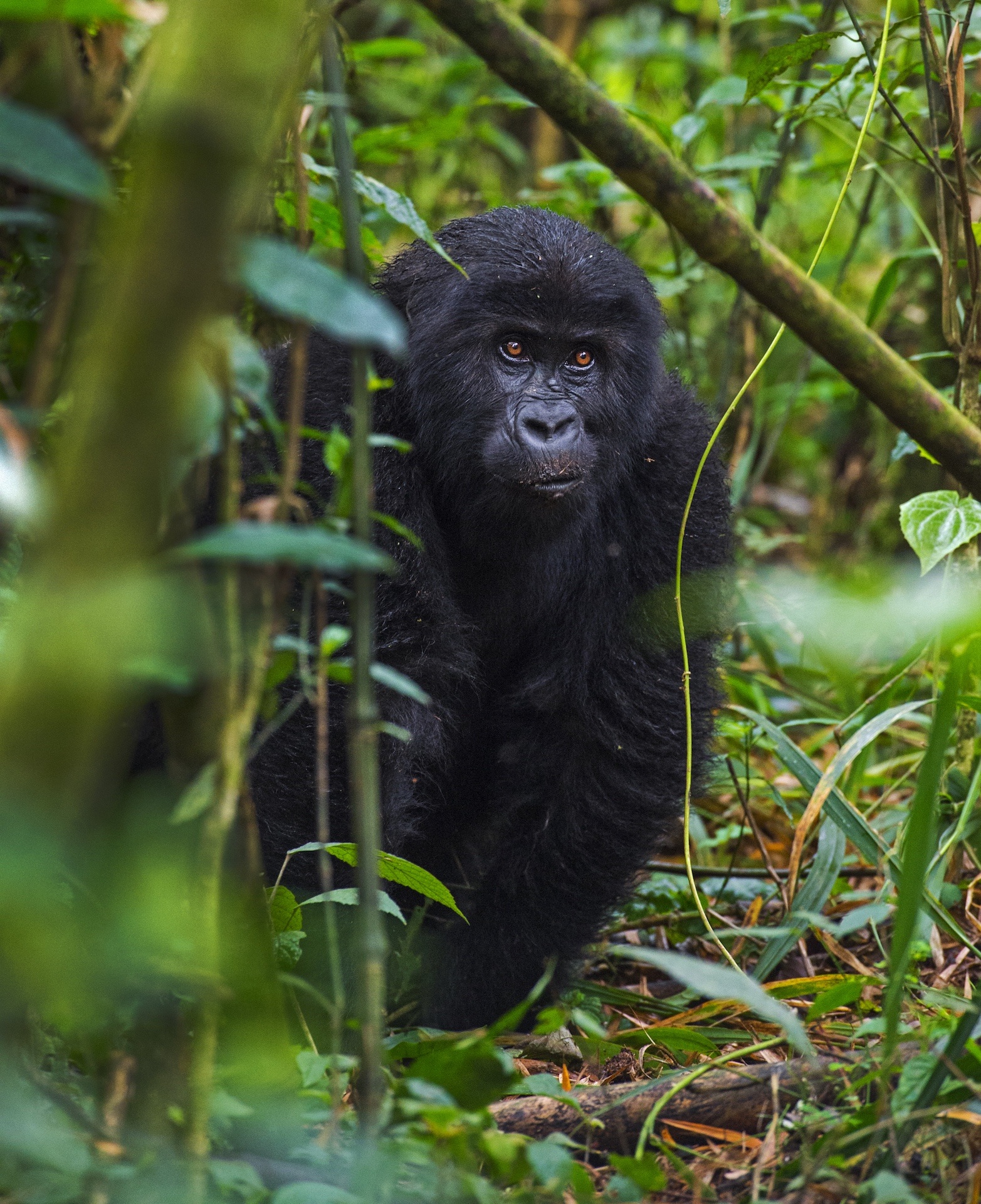
We’d trekked through the extremely dense forests of Kahuzi-Biega National Park for over three hours without seeing a single eastern lowland gorilla. Then, unexpectedly, we came upon this young male. He was shy and cautious, definitely not a creature habituated to seeing humans.
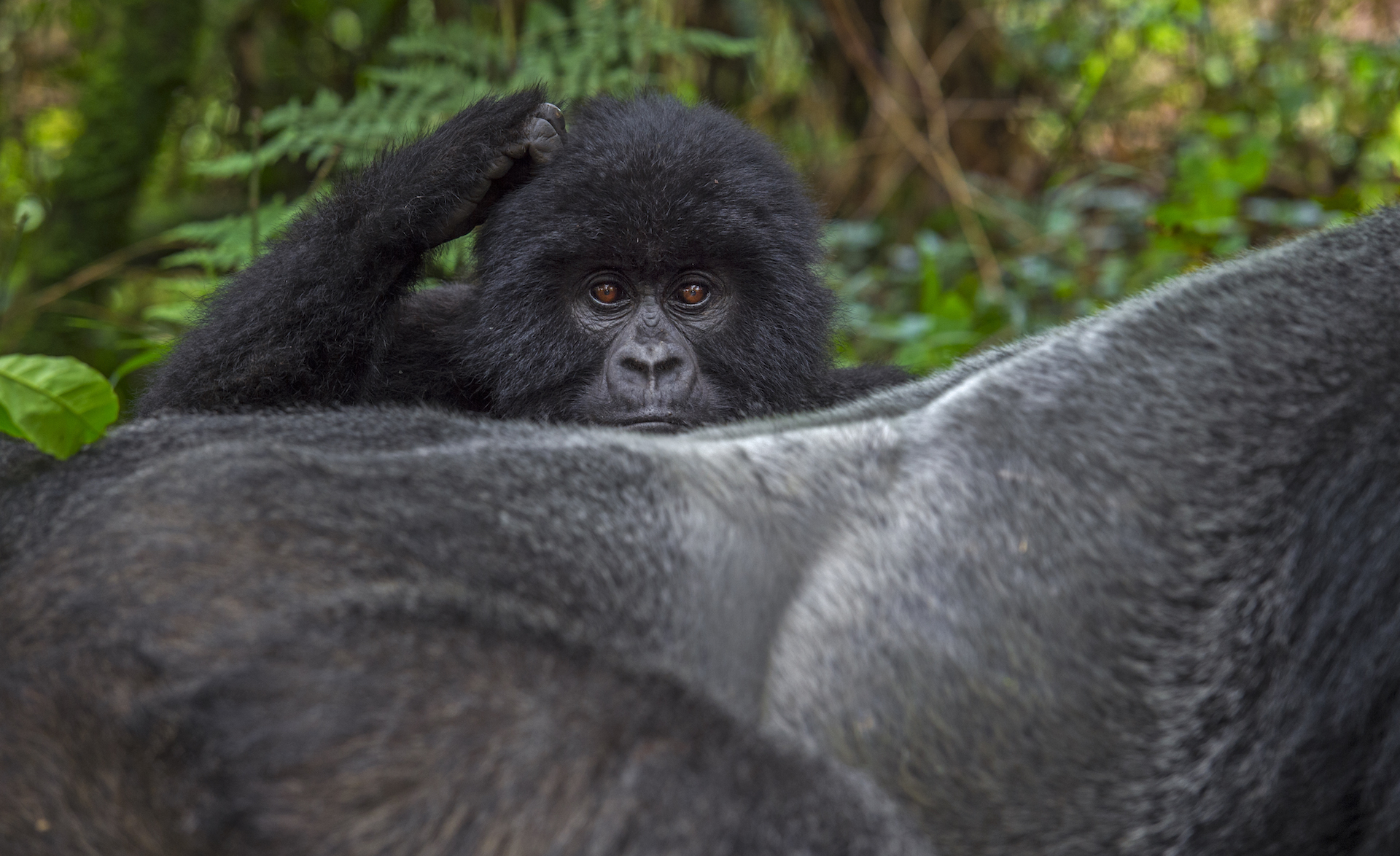
From behind the protective safety of a silverback, a baby mountain lowland gorilla peeked at us with shy curiosity. When the silverback mock charged us, we understood they were not happy to have visitors. It was time to leave.

United States
+1 (425) 454-2113
1756 114th AVE SE
Bellevue, WA 98004
India
+91-11 39585644
IT C-7 KMG Tower
2nd Floor, Sector 67,
SAS Nagar
Mohali – 160062, Punjab