


Text by Riccha Paul | Photos by Amoghavarsha

The Western Ghats boast some of the lushest and most biodiverse forests of India. They offer breathtaking views, pleasant temperatures, and are home to some of the most interesting creatures in the natural world. One of the star predators in these woods is the pit viper. Pit vipers can also be found in the various plantations of the Western Ghats. They come out to bask in the sun when their bodies need to be warmed up and comfortably slither back to a shadier spot once their body temperature is regulated. They use their energy wisely and make the most of the plantation habitat.
The most common pit vipers found in the Western Ghats are the Malabar pit viper and the hump-nosed pit viper. The most spectacular feature of these snakes is the heat sensing pits located near their mouths, giving the illusion of nostrils. Pit vipers use this feature to sense and locate their prey, i.e. warm-blooded animals, with great accuracy.
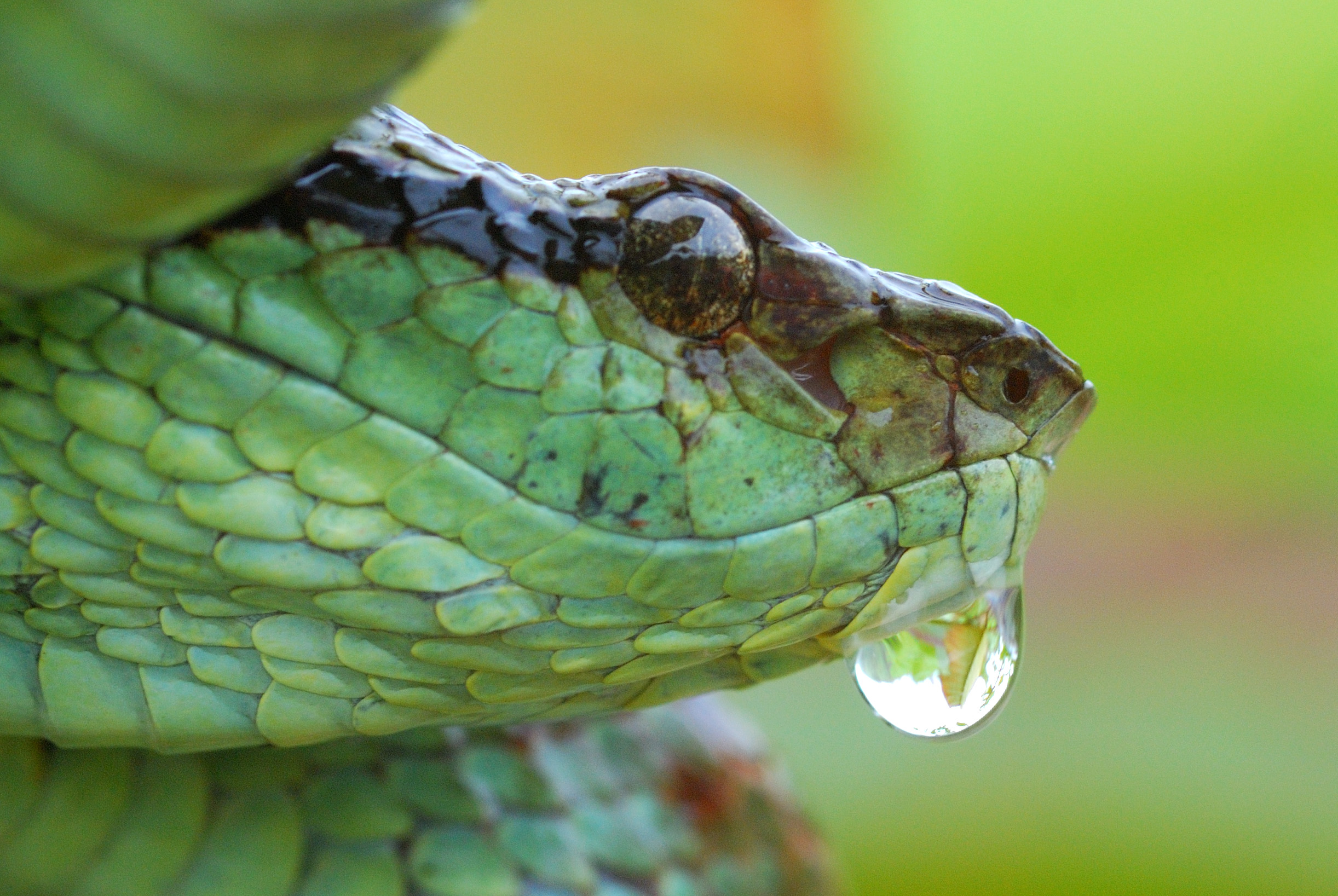
Pit vipers get their name from the heat-sensing “pits” near their nostrils.
These snakes are fast and can strike moving prey with precision. They are seen in beautiful hues and patterns and are relatively smaller in size compared to other vipers. They are extremely well camouflaged and can remain still in the same position for very long periods. They may remain motionless to hunt, to rest, or to conserve energy, as they are cold blooded creatures and sunlight is at a premium in dense forests.
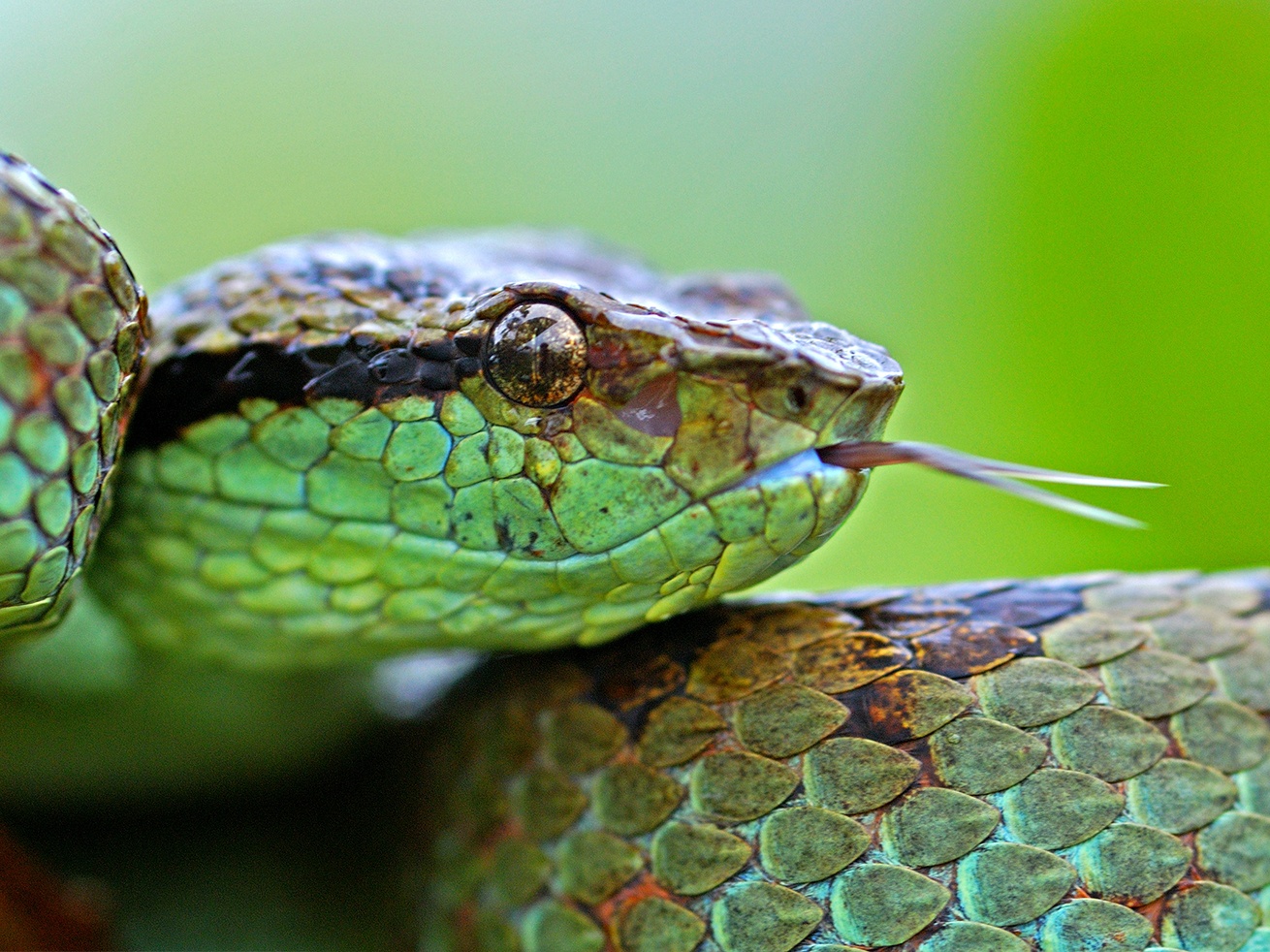
Pit vipers are mostly nocturnal hunters, which allows them to take advantage of the cooler night air to use their pits or infrared receptors to detect warm-blooded prey.
Pit vipers are venomous snakes. The effect of their venom ranges from mild to fatal on humans. Though they seldom bite humans, they will do so when provoked. They hunt at night and during the early hours of the morning, generally eating lizards, frogs, birds, and rodents.

The hump-nosed pit viper has a slightly upturned snout which it tends to keep raised at an angle of about 45 degrees while slithering on the ground.
SPOT THEM:
The forests of the Western Ghats are the ideal hunting grounds of pit vipers. They can also be found in the plantations of the Western Ghats.

United States
+1 (425) 454-2113
1756 114th AVE SE
Bellevue, WA 98004
India
+91-11 39585644
IT C-7 KMG Tower
2nd Floor, Sector 67,
SAS Nagar
Mohali – 160062, Punjab


