The painting in the Lascaux Caves, France, where Claudia Fehfirst glimpsed the Przewalski horse. Photo: archeologie.culture.fr
The earliest archaeological evidence of domesticated horses dates back to 3500 B.C. Since then, our trusty steeds have pulled our ploughs, drawn our chariots, and travelled to new lands with us. They have been the subject of our sculptures, poetry, theatre, and music; our companions in times of war and peace for centuries.
This partnership has been so successful that there are almost no wild horses left in the world. The feral horses of today are actually those that escaped domestication and returned to life in the wild. All but one species.
The Przewalski (pronounced shuh-val-skee) is the last truly wild horse in the world. The stocky breed is named after Russian explorer, Colonel Nikolai Przhevalsky, who is popularly credited with discovering the prehistoric equine in the 1800s. In fact, it was first noted by a German gent called Johann Schiltberger in the 15th century. Johann recorded a description of the animal in his diary, while he was in Mongolia as a prisoner of a Mongol Khan named Egedi.
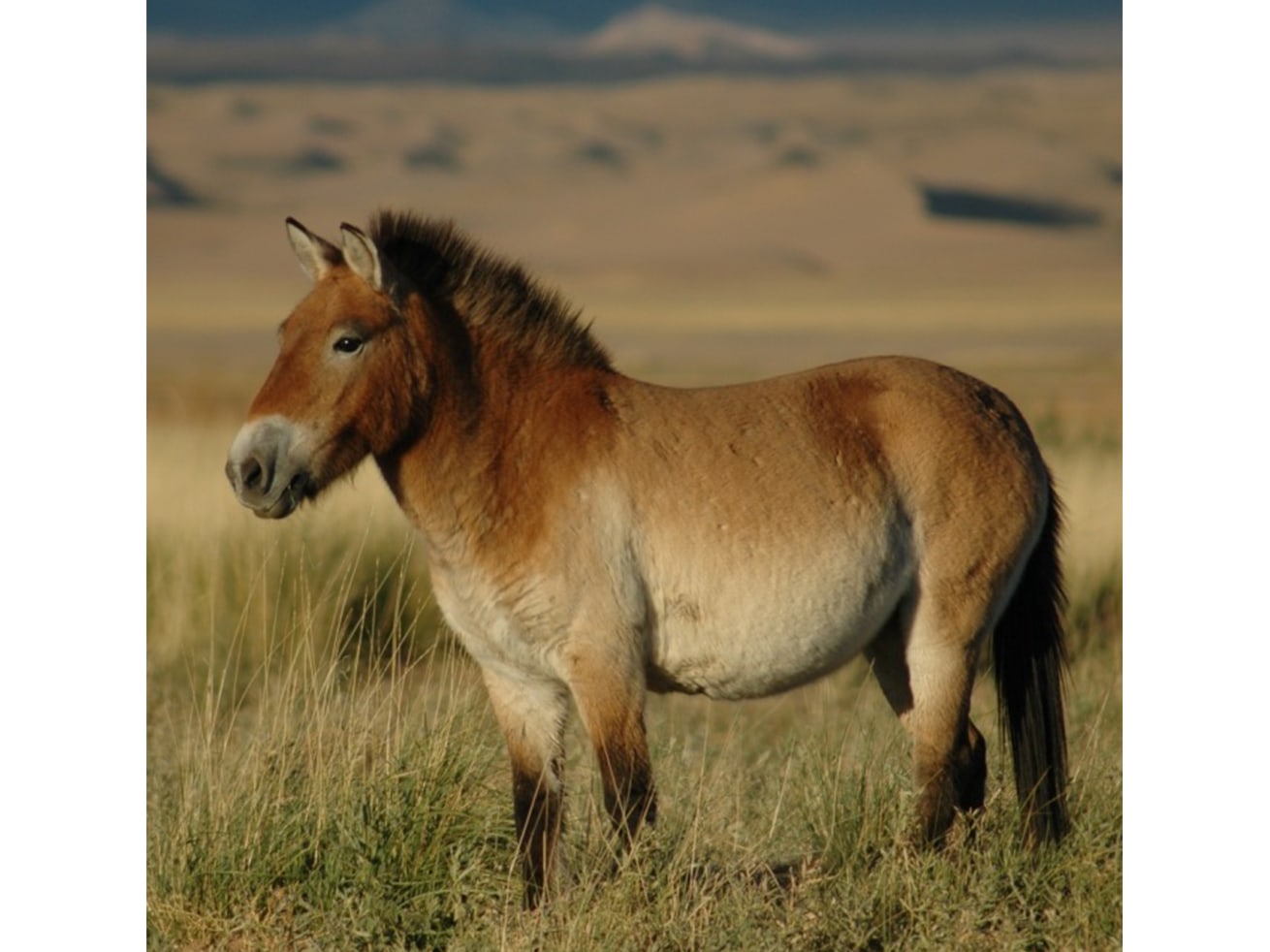
Photo of reintroduced Przewalski's horse taken at release site. Photo: Claudia Feh/Wikipedia Commons
Somewhere between the 15th and 19th century, the population of these horses went in to serious decline. Too wild to be domesticated, they were hunted for their meat. This coupled with habitat loss pushed their numbers to the brink of extinction, and after World War II, there were only 31 left in the world, in two zoos in Munich and Prague. By the end of the 1950s, only 12 remained.
The comeback of the Przewalski breed is largely credited to ClaudiaFeh, a passionate conservationist who has studied free-living horses for over 30 years. Her first glimpse of the breed was in the French Lascaux Caves, where she viewed prehistoric paintings of Przewalski horses as a teenager. Little did she know then that she would go on to raise the only natural herd of Przewalski horses left in the world.

Nomadic Mongolian communities in the steppes believe that Przewalski horses are man’s messenger to the gods. Photo: wrangel/123rf.com
Claudia’s ultimate goal was to reintroduce the horses to their native habitat in the steppes of Mongolia, but she knew the involvement of the local community was integral to the project’s success. To this end, a research unit was set up in the buffer zone of the Khar Us Nuur National Park. A few years later, and over a decade after she first began the project, the first herd of Przewalski horses was moved from France to Mongolia.
Today, these are 1,500 of them. In China, a group has been reintroduced near the Gobi Desert; another herd has been introduced into Hungary’s Hortobágy National Park, and yet another has been brought to Askania Nova reserve in southern Russia. Best of all, every herd runs free.

United States
+1 (425) 454-2113
1756 114th AVE SE
Bellevue, WA 98004
India
+91-11 39585644
IT C-7 KMG Tower
2nd Floor, Sector 67,
SAS Nagar
Mohali – 160062, Punjab